VTX Macro Adds Market News Context for Smarter AI Decisions
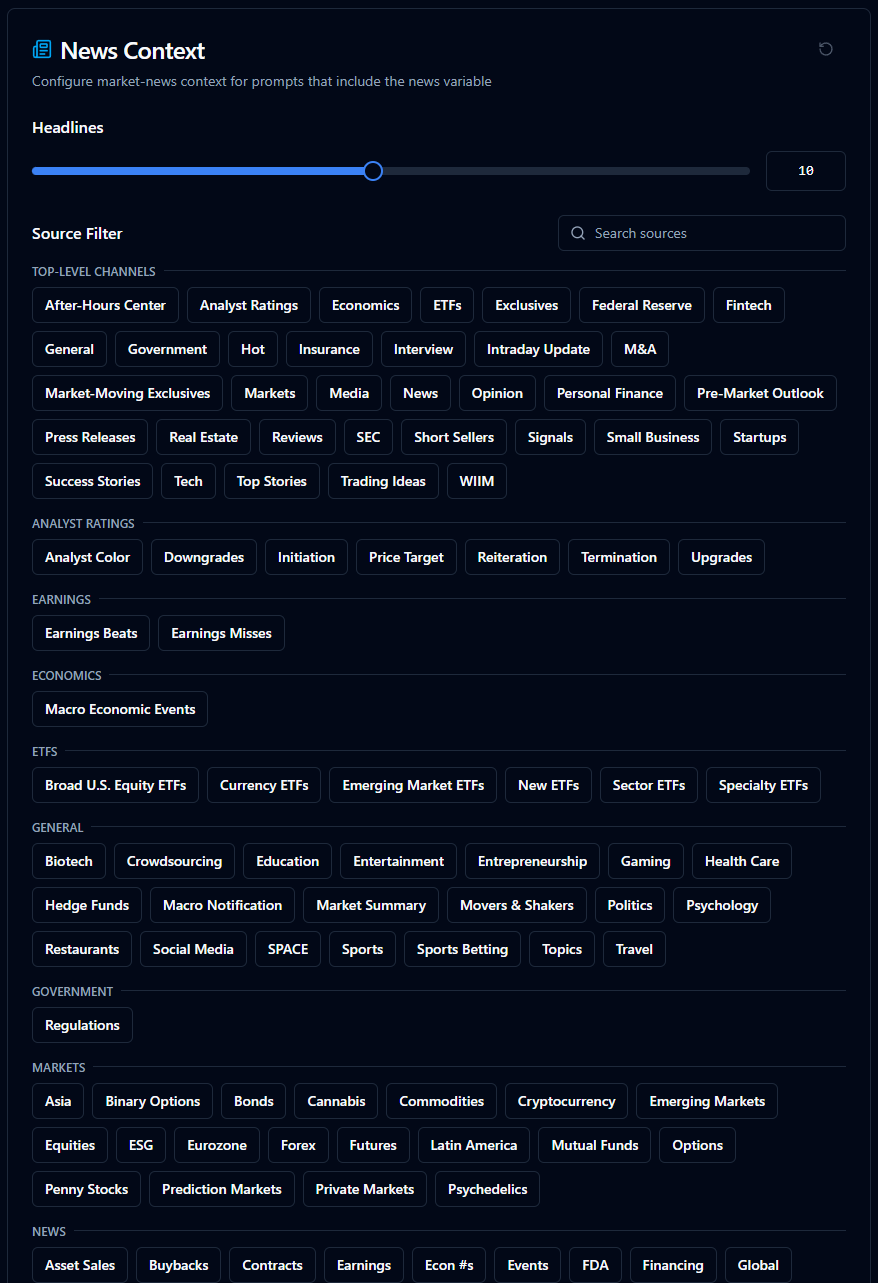
VTX Macro’s AI workflows are getting a new source of context: market news. A new News Context panel on the AI page lets users choose how many recent headlines the AI can see and optionally filter headlines by source category. When a prompt includes the news variable, VTX Macro can now provide compact, prompt-ready headline context so the AI can better explain market movement, qualify trade setups, and reason around fresh developments.
The news feed is designed as advisory context, not a replacement for price action or risk controls. The AI still receives the core trading inputs users rely on, including market data, account state, positions, performance behavior, and calendar risk. News now becomes another lens the model can use when the active prompt asks for it.
This release also strengthens account-equity handling. VTX Macro now tracks whether account balance snapshots are trusted or quarantined, helping protect drawdown and performance logic from sudden outlier readings. Market-equity history can also be scoped more precisely, including support for DEX-specific perps equity, which makes guardrails clearer for HIP-3 and other market-specific trading contexts.
On the trading screen, manual market closes are more reliable across symbols. Position-close actions now resolve the intended symbol and price more carefully, reducing the chance that a close confirmation depends on the currently selected chart instead of the position being closed.
AI snapshots and model settings also receive polish. Snapshot sync checks now better understand newer model-filter defaults, so older saved snapshots are less likely to appear incorrectly out of sync. The AI settings experience now includes the new news configuration in saved preferences and snapshot comparisons.
Finally, the platform adds smoother, configurable animations for leaderboard and analytics values, plus improved table behavior for symbol performance. These are small quality-of-life touches, but they make fast-changing stats easier to scan without changing the underlying data.